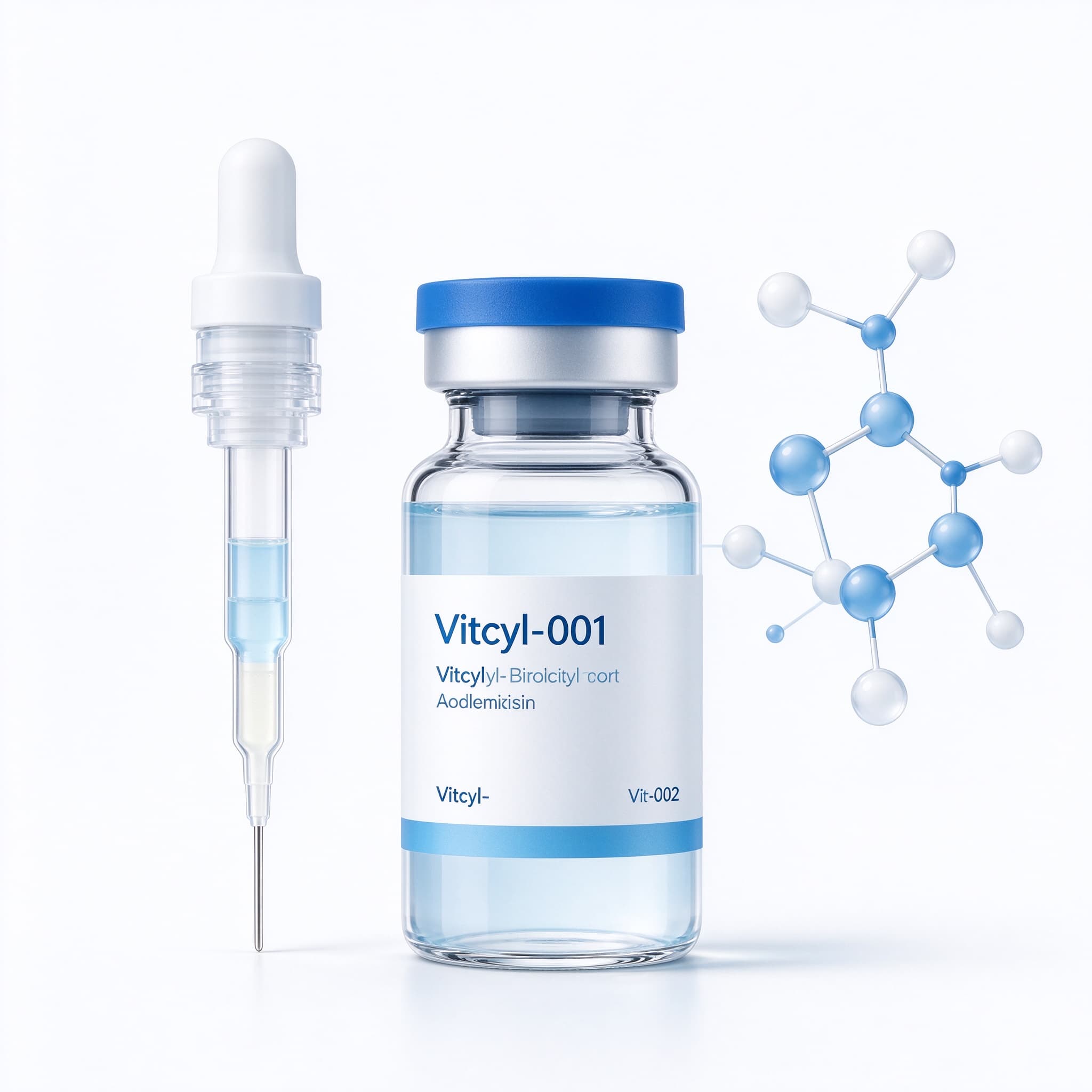

Establishment of In Vitro Vitcylation Reaction System
Establish and optimize vitcylation reaction conditions in in vitro reconstituted systems to lay the foundation for subsequent research
12-研究员操作实验
Free-Vitcylation Probe
Vitcyl-002 is a non-esterified vitcylation chemical probe designed for in vitro protein modification reactions and validation experiments.
Vitcyl-002 is a self-developed free vitcylation chemical probe by Deep PTM, specifically designed for in vitro vitcylation research. Unlike the esterified Vitcyl-001, this probe does not contain esterified groups and has excellent water solubility, allowing direct dissolution in PBS buffer for in vitro vitcylation reaction research.
The product is suitable for various in vitro systems such as cell lysates, purified proteins, and enzyme reaction systems. It can be used for vitcylation enzyme activity validation, reaction mechanism research, and target protein modification detection, providing an important tool for in-depth exploration of vitcylation biological functions.
Establish and optimize vitcylation reaction conditions in in vitro reconstituted systems to lay the foundation for subsequent research
Label purified target proteins with the probe for functional validation and structural studies.
Measure and validate the catalytic activity of vitcylation-related enzymes and evaluate enzyme kinetics.
Validate vitcylation sites identified by mass spectrometry in vitro and investigate their biological significance.
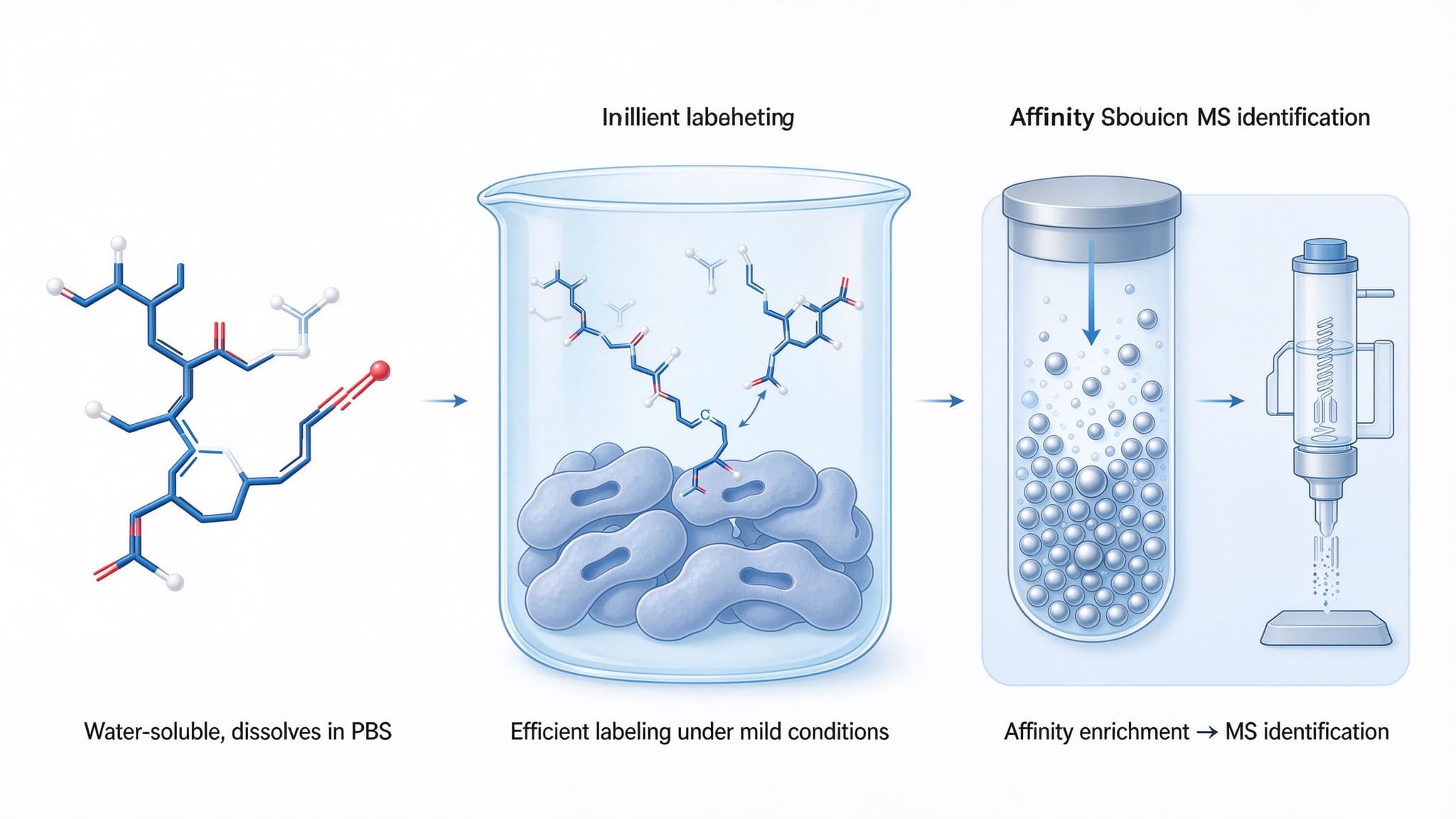
Vitcyl-002 Technical Principle
The water-soluble probe reacts with protein samples in vitro, supports click chemistry and enrichment, and enables LC-MS/MS analysis.
Vitcyl-002 is a free vitcylation chemical probe designed for in vitro research. Its water-soluble structure enables direct use in PBS-based reaction systems, allowing efficient labeling of proteins in lysates, purified protein samples, and enzyme reaction systems. Labeled proteins can then be enriched and analyzed by high-resolution mass spectrometry.
The following conditions are recommended starting points. Optimize the parameters for the sample type and research objective.
| Condition | Value | Notes |
|---|---|---|
| Probe Working Concentration | 10-100 μM | Optimize according to protein type and reaction system |
| Reaction Time | 1–2 hours | Up to 4 hours for selected systems |
| Reaction Temperature | 37°C | Use a temperature-controlled water bath or incubator |
| Reaction Buffer | PBS, pH 7.4 | Or HEPES buffer |
| Protein Concentration | 0.1-1 mg/mL | Adjust according to the detection method |
| Control Setup | Without probe / Without vitamin C | Set negative controls to verify specificity |
Reagent bottles and laboratory supplies